Nic M.
What to Do When Your Heater Stops Working in Wichita: Quick Tips

When it comes to What Should I Do if My Heater Suddenly Stops Working During Winter?, winter heater failures in Wichita, KS demand immediate action: shut off the unit, check the thermostat and breaker, then call a licensed technician. G.M. Air Conditioning & Heating offers 24/7 emergency service across Wichita. Holds a perfect 5-star Google rating from over 100 reviews for fast, dependable repairs.
Why Did My Heater Stop Working?

February is one of the most common months for furnace breakdowns in Wichita. After running nearly nonstop through December and January, heating systems are tired, and weak components finally give out during a late-winter cold snap. A furnace that seemed fine in early winter suddenly refuses to turn on or struggles to keep the house warm.
What Puts So Much Strain on a Wichita Furnace?
Winter in Wichita puts serious strain on a home's heating system, especially during periods of freezing temperatures and high energy demand. The system works overtime for months, and that continuous operation wears down parts in predictable ways. Common failure points include:
Ignition system issues — the component that lights the burners fails after heavy use
Blower motor problems — the fan that pushes warm air through the ducts gives out
Thermostat malfunctions — the control unit stops communicating with the furnace
Clogged filters — restricted airflow forces the system to work harder and overheat
How Long Has the System Been Running?
The math is simple. A furnace that runs nearly nonstop through December and January accumulates hundreds of hours of wear. By February, that wear catches up. Homeowners who skipped a fall tune-up often discover the problem the hard way — on the coldest night of the season.
G.M. Air Conditioning & Heating has served Wichita since 2006. Its certified technicians are trained to handle air conditioning and furnace repair, installation, and maintenance. When a furnace stops mid-winter, the cause is almost always tied to that months-long stretch of continuous operation. Knowing the common failure points helps homeowners describe the problem clearly when they call for help.
What Should I Do if My Heater Suddenly Stops Working During Winter?
A sudden heater failure during a Wichita winter creates an immediate comfort and safety risk. Homeowners should follow a simple troubleshooting sequence before calling for professional help. These steps resolve many common issues without a service visit.
Check the Thermostat First
The thermostat is the most overlooked cause of a heater that won't turn on. Confirm the system switch is set to "heat" rather than "cool" or "off." Verify the temperature setting sits at least five degrees above the current room temperature. A dead battery or a bumped dial can stop the furnace from receiving the signal to fire up.
Inspect the Air Filter
A clogged air filter triggers safety limit switches that shut the furnace down. Locate the filter slot on the furnace or in the return air grille. Hold the filter up to a light — if no light passes through, replace it immediately. Dirty filters cause more emergency calls than any other single component.
Reset the Circuit Breaker
Furnaces draw significant power, and a tripped breaker is common during cold snaps. Open the electrical panel and look for a breaker labeled "furnace" or "HVAC" that sits in the middle or off position. Flip it fully to off, then back to on. If the breaker trips again within minutes, an electrical issue requires a technician.
When to Call for Emergency Service
If these three checks do not restore heat, the problem involves a component that requires professional diagnosis. G.M. Air Conditioning & Heating provides 24/7 emergency services to address any urgent heating challenges. A technician arrives with the diagnostic tools and replacement parts needed to get the system running again.
What causes a furnace to stop working suddenly?
The most common causes include a tripped safety switch from a dirty filter, a failed ignitor, or a gas supply interruption. February sees the highest rate of furnace breakdowns in Wichita because systems have run nearly nonstop through December and January.
Can a homeowner fix a frozen condensate line?
Yes, if the homeowner can locate the PVC drain line and it is frozen at the exterior termination point. Pouring warm (not boiling) water over the frozen section usually clears the blockage. If the freeze is inside the furnace cabinet, call a professional to avoid water damage.
Can I Fix a Frozen Furnace Myself?
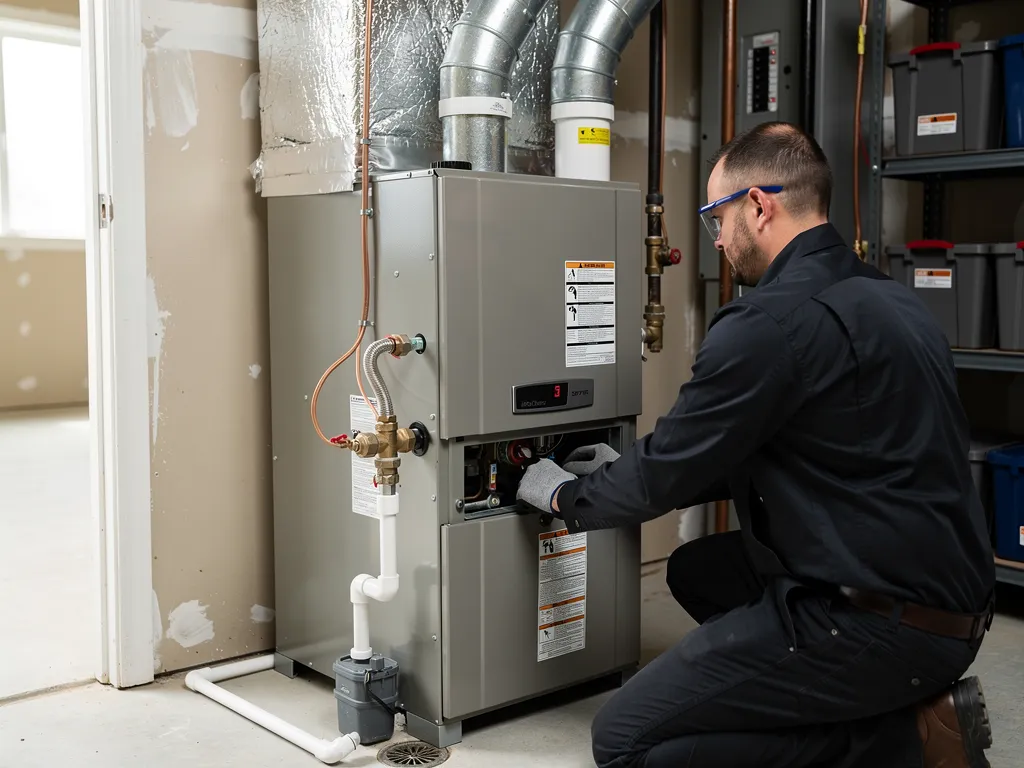
A frozen furnace often results from a blocked condensate drain or frozen exhaust pipe. These blockages trigger a safety shutdown that stops the heating system from running. Homeowners can safely address this issue without calling a technician in many cases. The first step involves checking the exterior exhaust and intake vents for snow or ice buildup.
What should I do if I find ice on the vents?
Clearing snow or ice from the exterior exhaust and intake vents is a safe DIY task. Use a broom or a soft brush to gently remove the blockage. Do not use sharp tools or hot water, as these can damage the vent piping. After clearing the vents, reset the furnace by turning the power switch off, waiting 30 seconds, and turning it back on.
When should I stop troubleshooting and call a professional?
If the furnace does not restart after clearing the vents and resetting the system, stop all DIY attempts. A certified technician should inspect the unit for internal damage. Internal components like the condensate trap, blower motor, or heat exchanger may have frozen or cracked. G.M. Air Conditioning & Heating's certified technicians are trained to handle all heating and cooling needs with expert workmanship. Attempting further repairs without proper training risks damaging the system or voiding the warranty.
DIY Action | When It Works | When to Call a Pro |
|---|---|---|
Clear snow/ice from exterior vents | Furnace restarts after reset | Furnace does not restart |
Replace air filter | System runs but blows cold air | System trips breaker or smells gas |
Check thermostat batteries | Display is blank or unresponsive | Display shows error codes |
A frozen furnace that restarts after clearing vents typically runs without further issues. A system that stays off after a reset needs professional diagnosis to prevent a complete breakdown during the next cold snap.
When Should I Call for Emergency Furnace Repair?
A Wichita homeowner knows the moment: the thermostat reads 62 degrees, the house feels like a walk-in freezer, and the furnace sits silent. Strange noises, unusual smells, or a unit that refuses to turn on after basic troubleshooting all signal the time for emergency repair. Waiting through a frigid Kansas night only turns a fixable problem into a frozen-pipe disaster.
What Warning Signs Demand Immediate Action?
A gas smell or the odor of burning metal indicates a potential safety hazard that requires immediate professional attention. These smells are not minor annoyances. They point to combustion issues or electrical problems that put the entire household at risk. Without fail, some problem or system breakdown happens to many unfortunate homeowners at the worst possible time. Usually during the coldest stretch of the season.
How Fast Can a Technician Respond?
G.M. Air Conditioning & Heating offers 24/7 emergency services to address urgent heating challenges. All calls get returned the same business day, so no one sits in the cold wondering when help arrives. The company's perfect 5-star Google rating reflects fast, friendly service and cost-effective solutions that Wichita residents have come to trust.
Signs that warrant an emergency call:
Furnace produces grinding, squealing, or banging noises
Burning or gas odors emanate from vents or the unit
System fails to start after checking the thermostat and breaker
No warm air circulates despite the furnace running
A quick response prevents minor failures from becoming major repairs. Homeowners who act fast protect both their comfort and their wallet.
How Can I Prevent Future Heater Failures?
Preventing future heater failures starts with a single proactive step: scheduling a fall furnace tune-up before winter arrives. This annual inspection catches small issues—a worn belt, a dirty flame sensor, a cracked heat exchanger—while they are still cheap and simple to fix. Skipping that checkup turns minor wear into a no-heat emergency on the coldest night of the year.
What Does a Fall Furnace Tune-Up Include?
A professional tune-up addresses the components that fail most often during Wichita winters. Technicians inspect the heat exchanger for cracks, clean the burner assembly, lubricate the blower motor, and verify the thermostat calibration. This work keeps the heating system running at peak efficiency and reduces the risk of a midwinter breakdown. Homeowners who invest in this maintenance avoid the scramble for emergency furnace repair when temperatures drop below freezing.
How Often Should Air Filters Be Changed?
Changing air filters monthly during the heating season improves airflow and system reliability. A clogged filter forces the furnace to work harder, raises utility bills, and can cause the limit switch to trip, shutting the system down. G.M. Air Conditioning & Heating recommends setting a calendar reminder for the first of each month from November through March. This simple habit costs a few dollars and prevents the most common cause of airflow-related shutdowns.
Maintenance Task | Recommended Frequency | Benefit |
|---|---|---|
Fall furnace tune-up | Annually before heating season | Catches small problems before they become expensive repairs |
Air filter change | Monthly during heating season | Maintains airflow, efficiency, and system reliability |
Thermostat calibration check | Annually during tune-up | Ensures accurate temperature control and even heating |
G.M. Air Conditioning & Heating offers top-rated HVAC services including furnace repair, installation, and maintenance to keep Wichita homes comfortable year-round. A small investment in fall maintenance eliminates the risk of waking up to a cold house in February.
FAQ
What should I do first when my heater stops working?
Check the thermostat, inspect the air filter, and reset the circuit breaker. These three steps resolve many common issues without needing a service visit.
Why do Wichita furnaces commonly fail in February?
After running nearly nonstop through December. January, weak components finally give out during a late-winter cold snap, especially in systems that skipped a fall tune-up.
Who should I call if troubleshooting doesn't fix my heater?
Call G.M. Air Conditioning & Heating, which offers 24/7 emergency service across Wichita with certified technicians and a perfect 5-star Google rating.
Conclusion
In closing, a winter heater failure demands swift action to protect your family and home from the cold. By following these steps—from immediate safety measures to professional diagnosis—you position yourself to restore comfort quickly and avoid costly damage. When you need expert furnace repair in Wichita, trust the certified technicians at G.M. Air Conditioning & Heating. Fast, transparent service and decades of local experience ensure your heating system gets the reliable care it deserves.
Call us Today


